The short version
- A code names the reading the boiler rejected, not the component that caused it.
- Two checks first: the pressure gauge, and whether the condensate pipe runs outside.
- Reset once. A boiler that locks out repeatedly is reporting something real.
- Write the code down with the make and model before anyone comes out.
Every modern boiler watches itself. There are sensors on the flow temperature, the return temperature, the flue, the gas valve, the water pressure and the flame, and when one of them reads something outside the range the control board expects, the boiler shuts down and puts a code on the display.
That code is useful. What it is not is a diagnosis. It tells you which measurement was wrong, and a wrong measurement has several possible causes. The distance between those two things is where people spend money on parts the boiler did not need.
Two checks before anybody is called
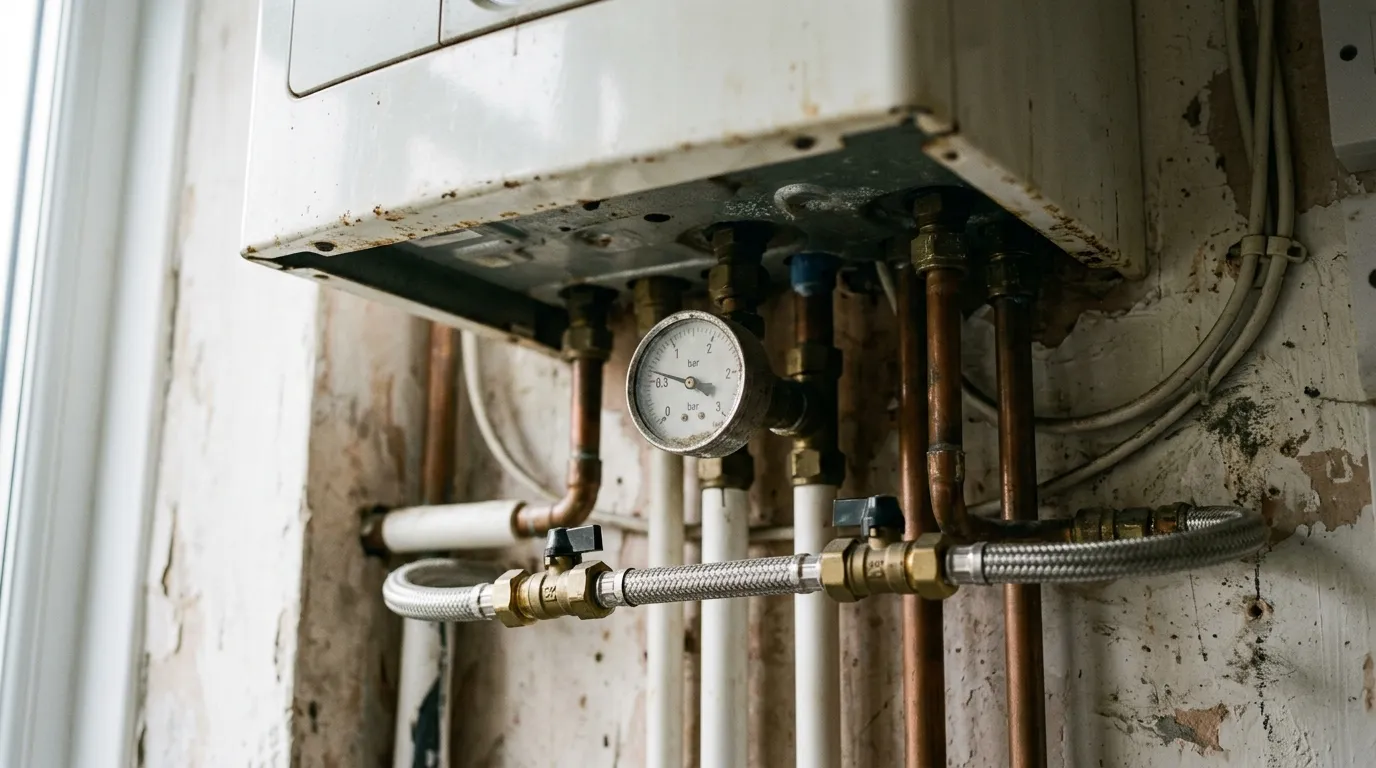
Look at the pressure gauge. Cold, a sealed system wants somewhere around one bar to one and a half. Below about point five and the boiler will refuse to fire, and the code it shows for that is one of the most common call outs there is. If the pressure is low, that is a clue about a hidden leak rather than a thing to simply top up and forget, but it does explain the lockout.
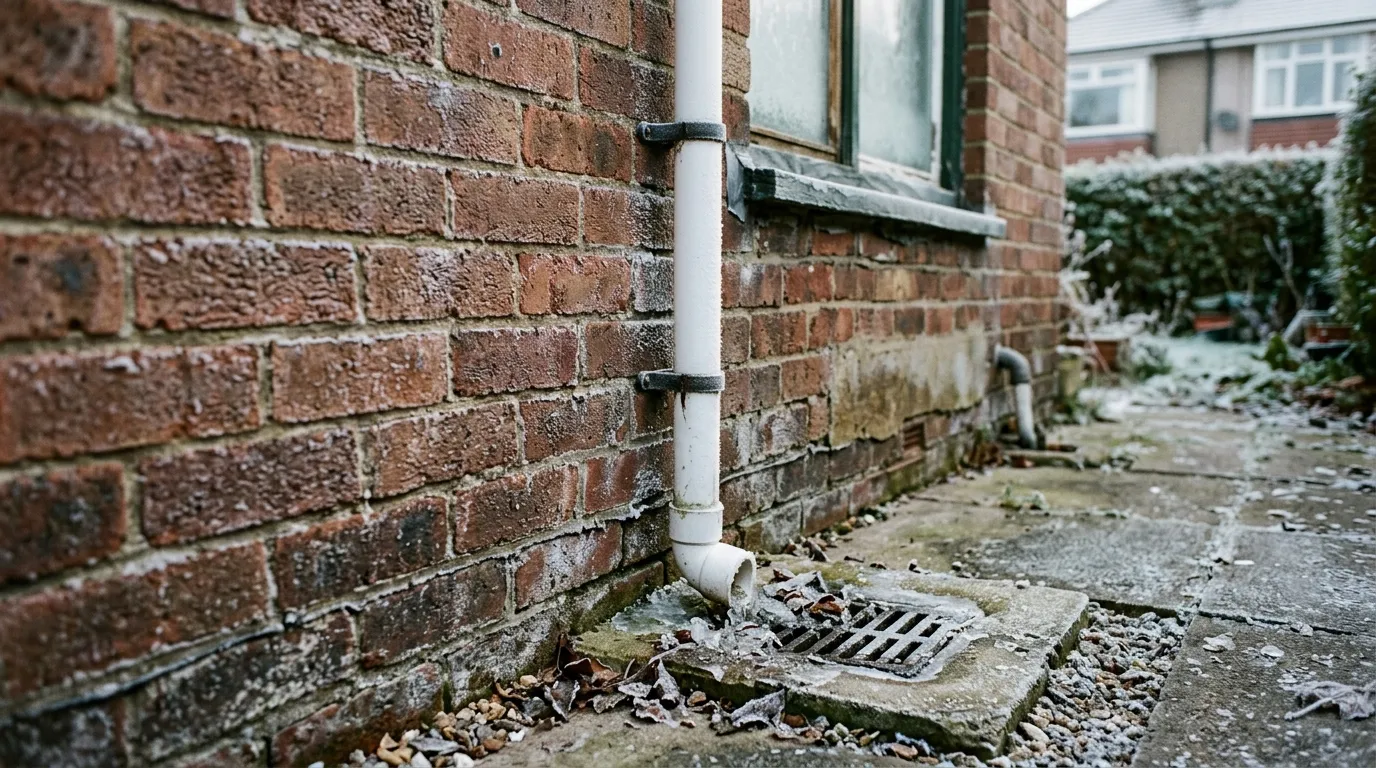
Then find where the condensate pipe goes. A condensing boiler produces acidic water as it runs, and that water has to drain. If the pipe leaves the building and runs down an outside wall in plastic, it freezes in a cold snap, the boiler cannot discharge, and it locks out. It is the reason heating engineers spend the first frost of every winter thawing pipes with warm water and a kettle, and it costs nothing to check.
Those two account for a large share of winter boiler breakdowns between them, and neither needs a part.
What the common families of code actually mean
Codes differ between manufacturers, so the number itself only means something with the make and model beside it. What generalises is the family.
Ignition and flame codes mean the boiler tried to light and either did not, or lit and lost the flame. Causes run from no gas at all, through a gas valve or an ignition lead, to a flame sensor that has gone dirty enough to stop seeing a flame that is actually there. Same code, four very different prices.
Flue and air pressure codes mean the boiler is not satisfied about what is going out of the flue. A blocked condensate, a failing fan, a pressure switch, or in the serious case a flue that has come apart inside a wall. The last one is why these codes are not ones to reset repeatedly.
Overheat and temperature codes mean the water got hotter than expected somewhere, which usually means it is not moving fast enough. A stuck pump, a closed valve, a sludged heat exchanger, air in the system. The thing that failed is rarely the sensor that reported it.
Pressure codes mean the sealed system has lost water. That is either a visible leak or a spent expansion vessel, and the shape of the fall tells you which.
What to write down
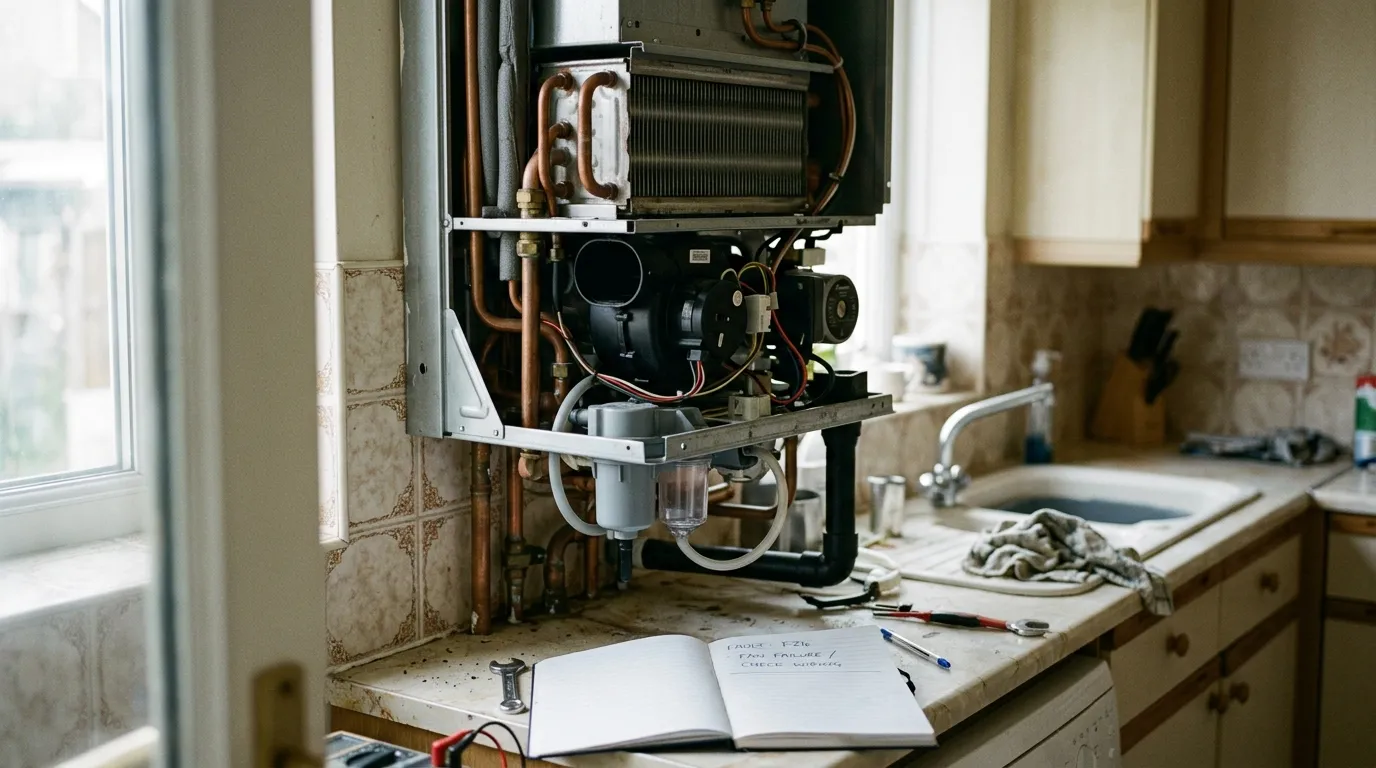
Four things, and they shorten the visit more than any description does. The make and model, which is on a plate behind the front panel or on the user guide. The exact code as it appears, including letters. The pressure reading when the boiler is cold. And what the boiler was doing when it happened, meaning whether it had been running for a while, or whether this was the first call for heat of the morning.
That last one carries real information. A fault at first fire on a cold morning points one way, usually condensate or ignition. A fault twenty minutes into a long run points another, usually circulation or overheat. Nobody can get that from the code.
With those four, the person coming out arrives with the likely parts rather than the likely questions, and the repair happens on the first visit more often than it otherwise would.
Send the make, the model, the code and the cold pressure reading with your postcode. Those four turn a diagnostic visit into a repair visit.
Frequently Asked Questions
- Once, yes, and it is worth doing because a genuine one off lockout clears and stays cleared. What is not worth doing is resetting repeatedly to keep a boiler running. A lockout is a safety response, and a boiler that locks out three times in an evening is telling you something that resetting does not address. If it will not stay running after one reset, leave it off and get it looked at.
- Water is leaving the system somewhere, or the expansion vessel has lost its charge. The first shows up as a visible weep at a radiator valve, a wet patch under the boiler or a damp spot on a ceiling below pipework. The second shows up as pressure that swings widely between cold and hot rather than falling steadily. They are different repairs and the pattern on the gauge tells you which one you have.
- It is worth narrowing from, and not worth pricing from. A code that points at the flue circuit covers a blocked condensate, a failed fan, a pressure switch and a flue that has come apart, and those are four prices. Any firm that quotes a fixed figure off a code alone is either averaging or hoping, and the figure changes when somebody opens the case.
- The rough test most engineers use is the cost of the repair against the age and the parts situation. Past about twelve years, parts for many models get scarce and expensive, and a repair that costs a third of a new installation on a boiler with two or three years left in it is poor value. Below that age, and with a part still in production, repairing is almost always the better buy.