The short version
- Cold at the top is air, and bleeding fixes it. Cold at the bottom is not air.
- What sits in the bottom is iron oxide: rust from inside the steel, carried round and dropped where the water slows.
- One cold radiator is a radiator job. Several, in the rooms furthest from the boiler, is the system.
- Balancing is free to try and fixes a surprising number of these.
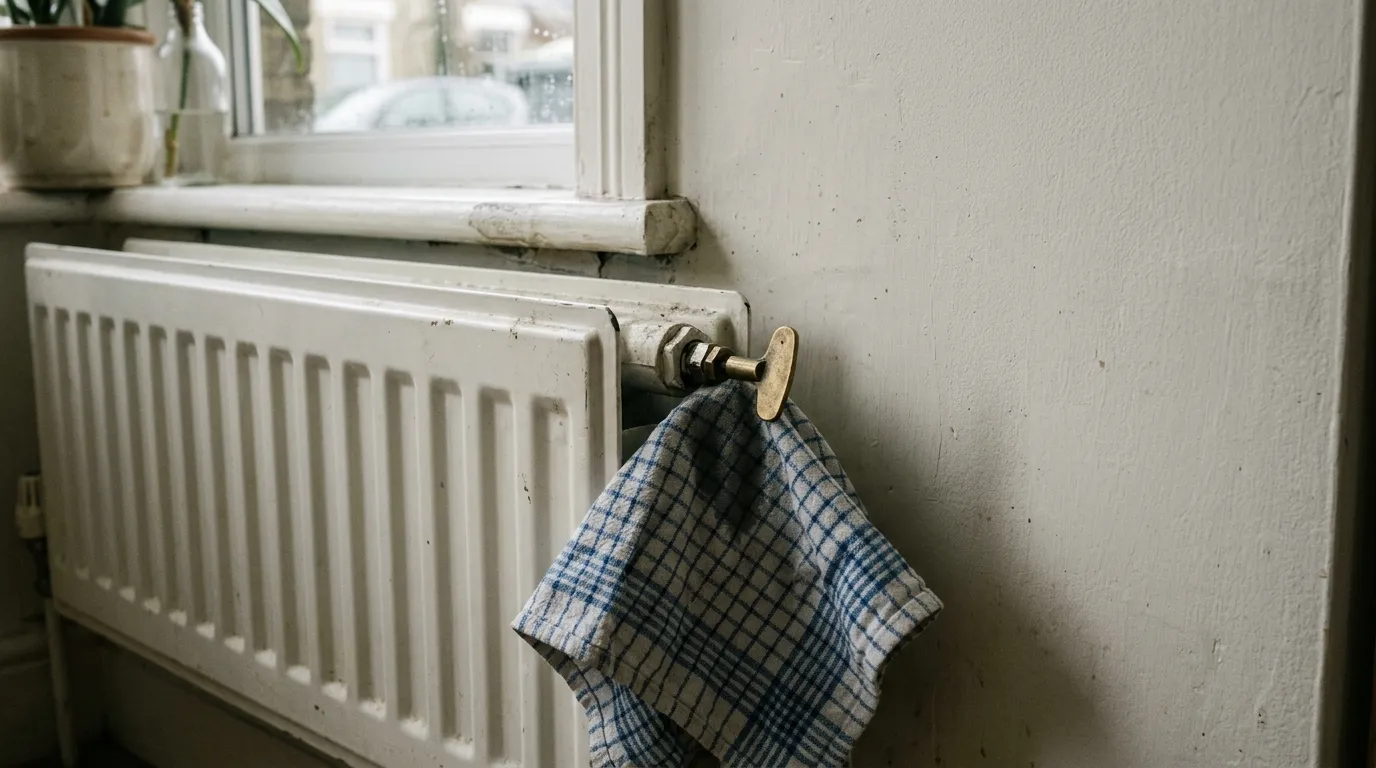
A radiator heats from the top down, because that is how convection works. Hot water comes in at one end, rises across the top, gives up its heat as it travels and drops as it cools. So a radiator that is warm across the top and stone cold along the bottom third is not broken in some general way. The water is not reaching the bottom, and something is in the way.
That something is almost always magnetite, which is the polite name for rust. A wet heating system is steel, water and a little dissolved air, and those three make iron oxide continuously for as long as the system exists. It is heavy, so it settles wherever the water slows down, and the slowest moving water in the house is at the bottom of a radiator.
The two checks worth doing before you call anyone
Run the heating for twenty minutes, then put a flat hand on the radiator and work down it slowly. What you are feeling for is the shape of the cold.
A clean horizontal line across the panel, warm above and cold below, is sludge. It is sitting level in the bottom of the radiator, which is why the boundary is straight. Patchy cold spots, often with a gurgle when the pump runs, is air. Cold everywhere, with the pipes at the valves hot, is usually the valve rather than the radiator at all, and a seized thermostatic head is a ten minute radiator repair.
Then do the same on every radiator in the house and write down which ones are cold and where. This is the check that changes the price. One cold radiator with everything else normal is one radiator to deal with. Several cold ones, all of them in the rooms furthest from the boiler, is a heating system that has never been balanced properly, and balancing costs nothing to try.
Why balancing comes first
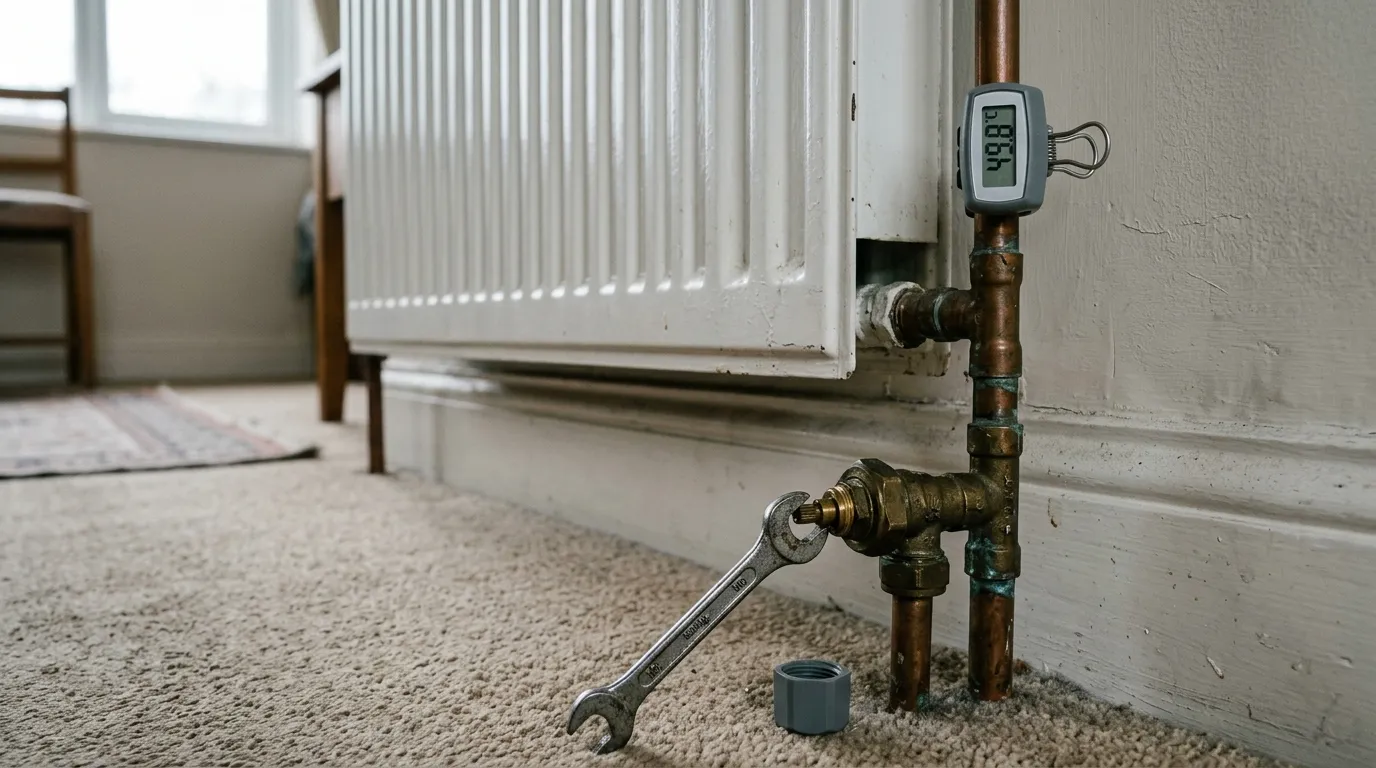
Water takes the easiest route, which means the radiators nearest the boiler get the flow and the ones at the end of the run get what is left. Balancing is the process of restricting the near ones at their lockshield valves until the far ones get their share, and it is measured on the temperature drop across each radiator rather than guessed.
It is worth insisting on before anything is taken off a wall, for two reasons. It is the cause often enough to be worth ruling out, and if the real problem is sludge then a system that was never balanced is the reason the sludge collected where it did. Fixing the radiator and leaving the flow pattern alone invites the same deposit back.
What gets done about it
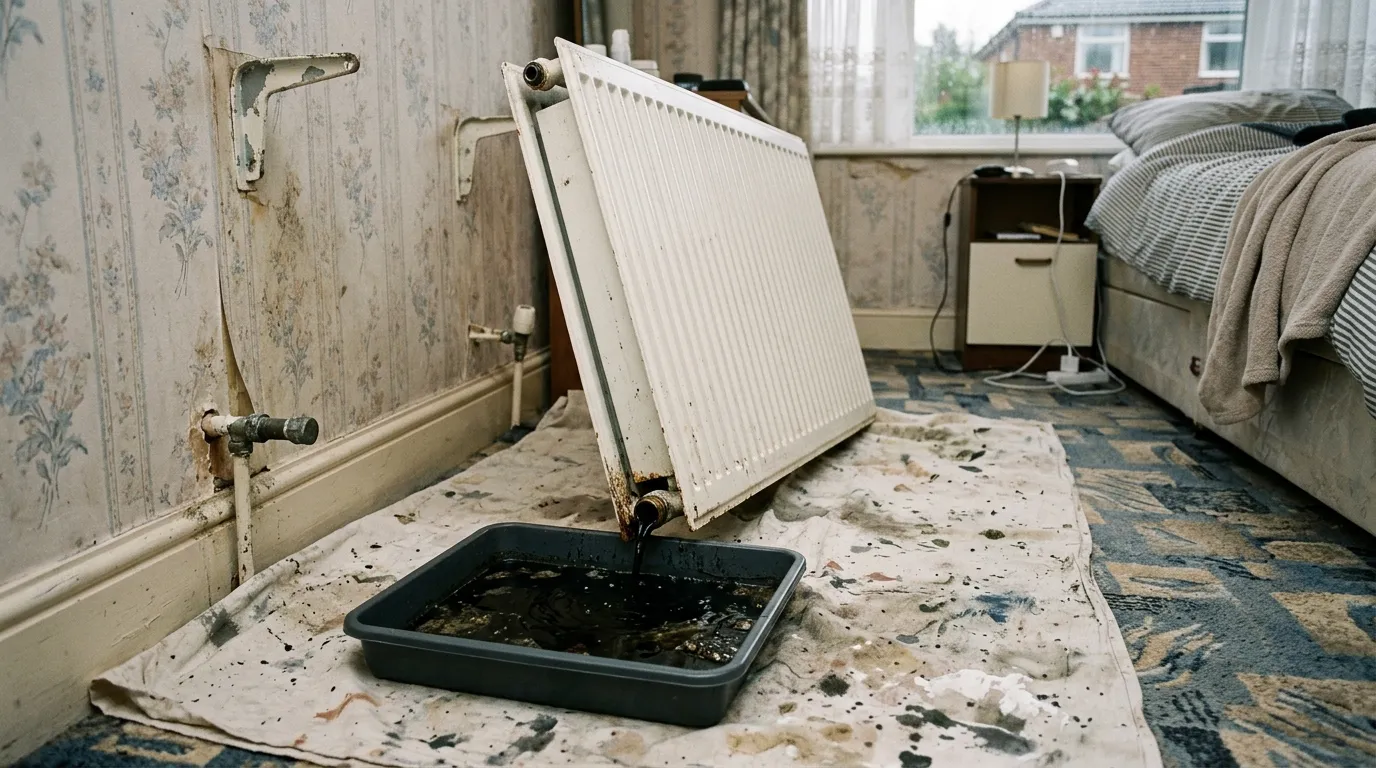
For a single radiator: both valves closed, the radiator taken off the wall, flushed through outside with a hose until it runs clear, refitted and the system topped back up. An hour or so, and the rest of the house keeps its heating while it happens.
For a system full of it, the honest answer is that it depends how far gone it is. A sludged system with cold bottoms on half the radiators and a boiler that keeps cutting out on temperature is what a power flush is actually for. A system with one dirty radiator and slightly grey water is not, and selling a flush for that is selling a day of machine time to solve an hour of problem. The test is what comes out of the system, not what is on the invoice.
Either way the part that stops it recurring is the dull part: an inhibitor dose, and a magnetic filter on the return so that what does form gets caught before it reaches a radiator. Both are cheap, neither is interesting, and skipping them is why some systems get flushed twice.
Walk round, note which radiators are cold and where on the panel, and send the list with your postcode. That pattern is most of the diagnosis.
Frequently Asked Questions
- No, and it is the commonest wasted hour in heating. Bleeding releases air, and air rises, so it only ever explains a radiator that is cold at the top. A radiator warm across the top and cold along the bottom has something sitting in the bottom of it, and that has to come out rather than be let out. Bleeding it just drops the system pressure and sends you looking for the filling loop.
- If the rest of the house heats normally and one radiator is cold at the bottom, it is usually that radiator. If several are, or the cold ones are all the furthest from the boiler, it points at the system: either the balancing or a general build up through the pipework. Which one it is changes the job and the price, so it is worth walking round every room and writing the pattern down before anyone is called.
- For a single radiator, no. It is isolated at both valves, taken off the wall, flushed outside and refitted, and the rest of the system keeps running while that happens. A full system flush is a different job and the heating is down for most of a day. The two get quoted as if they were interchangeable, and they are not.
- Two things do most of the work. An inhibitor dose in the system water stops the steel corroding in the first place, and it is cheap, but it gets diluted every time the system is drained and nobody tops it back up. A magnetic filter on the return catches what has already formed before it reaches a radiator. Neither is exciting and both are a fraction of the cost of the second flush.