The short version
- Find the internal stopcock now, in daylight, and turn it once to prove it moves.
- In a burst: stopcock off, cold taps open, heating off, electrics off if water is near them.
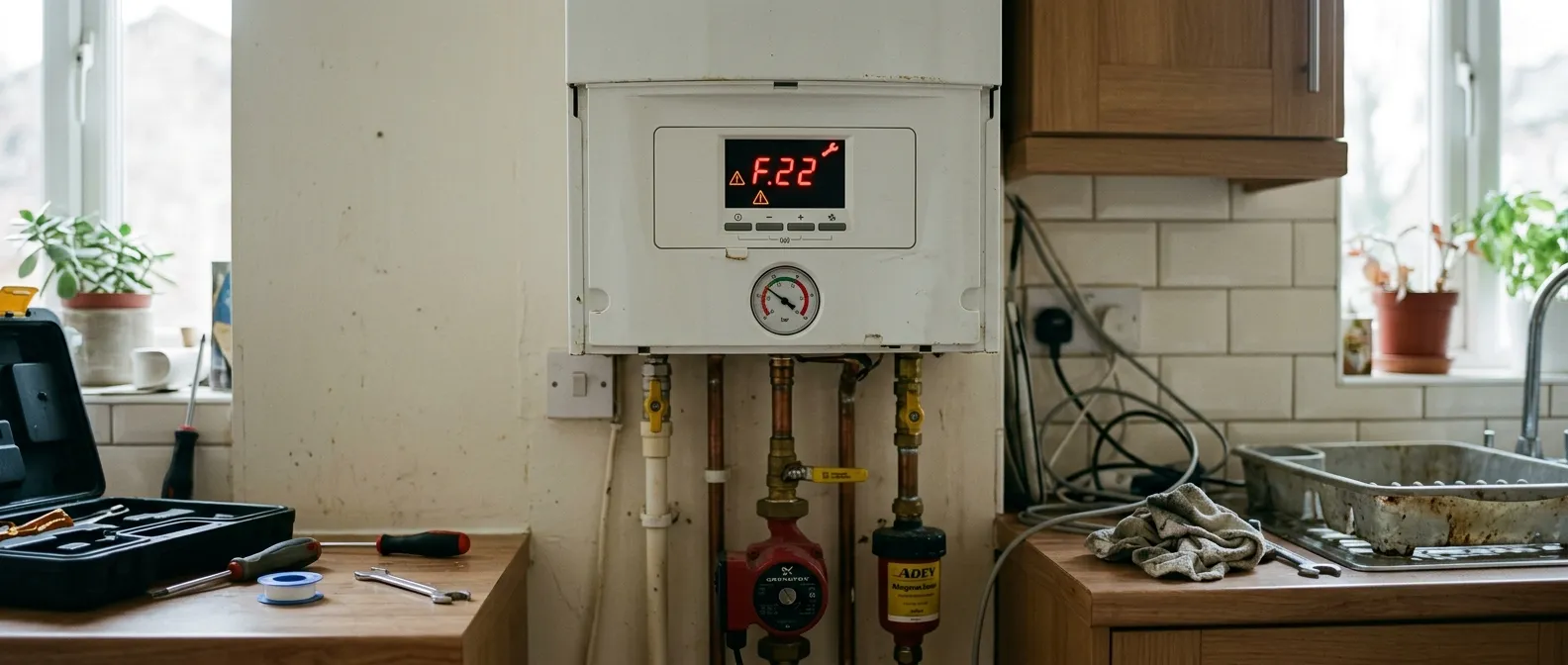
- If the stopcock will not turn, do not force it. Use the pavement stop tap or the appliance valve.
- A stored system keeps feeding a leak after the stopcock is shut, which is why the taps go on.
There is a version of a burst pipe that costs a few hundred pounds and a version that costs several thousand, and the thing that separates them is not how quickly somebody arrives. It is how long the water ran. Ten minutes of mains water into a floor is a repair. Two hours of it is a ceiling, a floor, and a conversation with an insurer.
All of which rests on one valve, and the single most useful ten minutes you can spend on your plumbing is finding it on an ordinary afternoon when nothing is wrong.
Where it is in a London property
The internal stopcock is on the incoming main, as close to where the main enters the building as the person who fitted it could manage. In a terraced or semi detached house that usually means under the kitchen sink, at the back of the cupboard behind whatever lives there now.
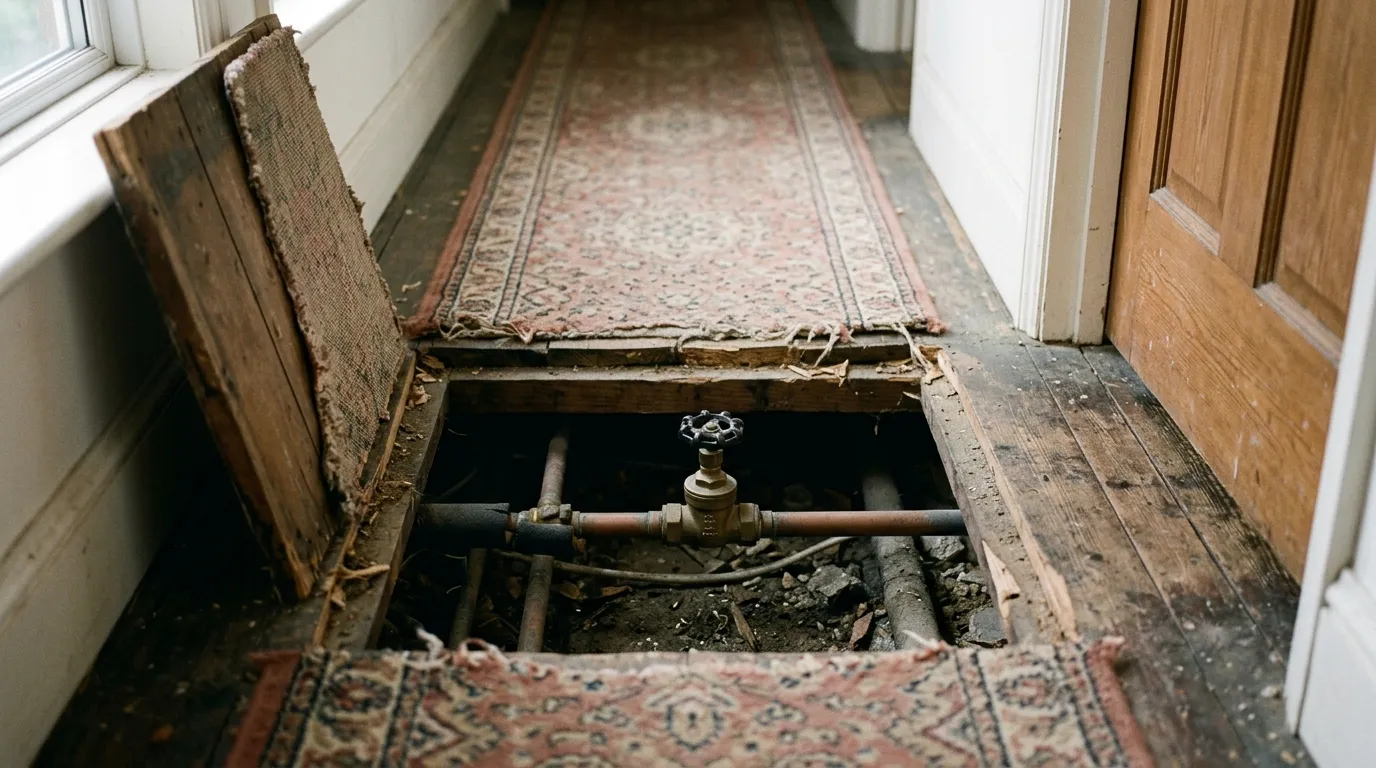
If it is not there, the next places to look are the downstairs cloakroom, a hallway floor hatch, under the stairs, in an airing cupboard, or in a garage or utility where the main comes through the wall. In a converted flat it is often in a hall cupboard with the meter, and in a purpose built block it can be in a riser cupboard on the landing shared with the next flat along.
It looks like a small brass valve with either a wheel head or a lever, on a pipe around fifteen to twenty two millimetres, and it will usually be the only brass thing on that run.
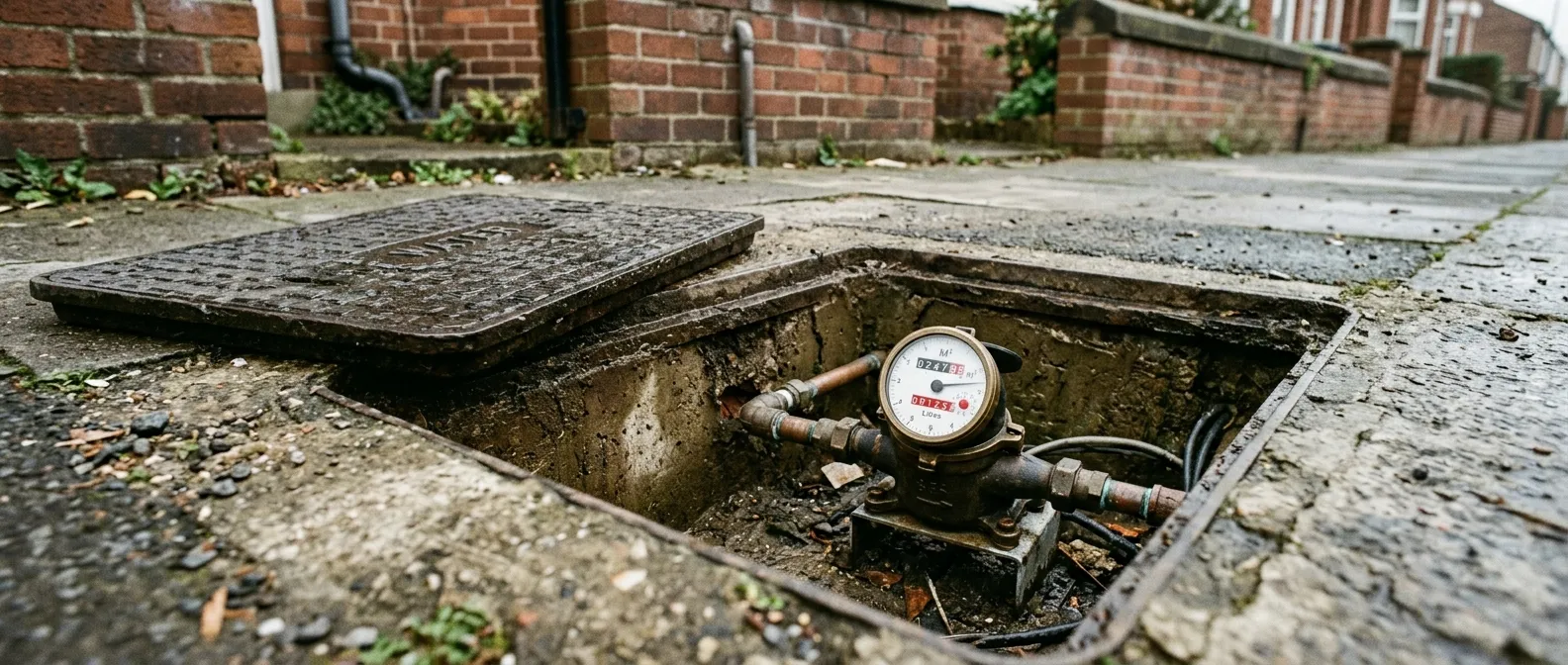
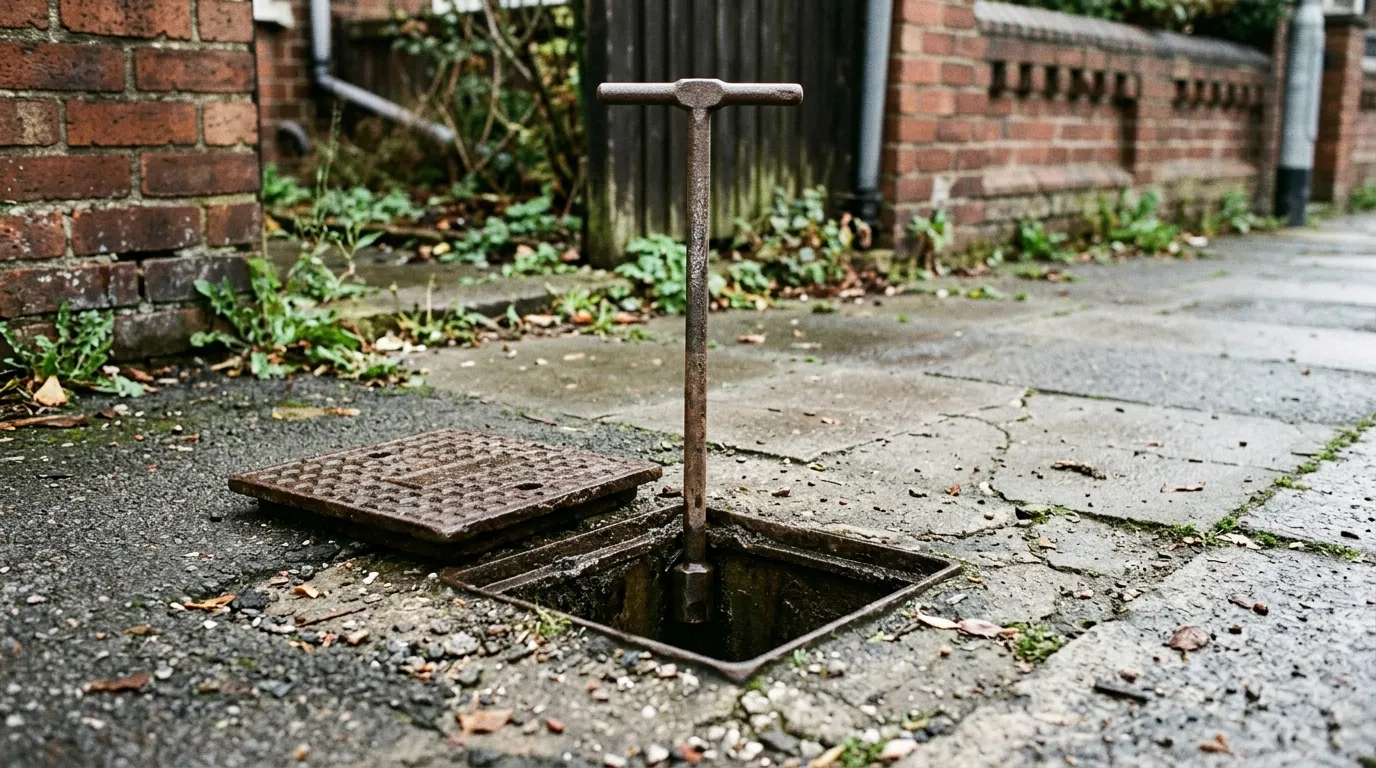
Outside, there is a second one: the boundary or pavement stop tap, in a small metal or plastic cover in the path or the pavement, with a vertical shaft down to the valve. That one needs a long handled key, which is a few pounds and worth owning if your internal stopcock is doubtful.
Turn it, now, while nothing is wrong
This is the part people skip, and it is the part that matters. A stopcock that has not been moved since the house was built will very often not move at all, and you do not want to discover that with water coming through a light fitting.
Close it clockwise, go and run a cold tap, and confirm it stops. Then open it again, fully, and back off a quarter turn so the gland does not bind. If it moved stiffly but moved, work it a couple of times. If it would not budge, stop, and put replacing it on the list as a planned job. A stopcock swap in daylight with the water off at the boundary is a straightforward visit. The same job during a burst is not.
While you are there, look for the smaller isolation valves on the appliances: under the basin, behind the toilet, on the washing machine and dishwasher tails. Each one of those lets a single thing be shut off without the whole property going dry, and a great many properties turn out not to have them. That is worth knowing in advance too, because it changes what a simple tap washer costs.
The ten minutes
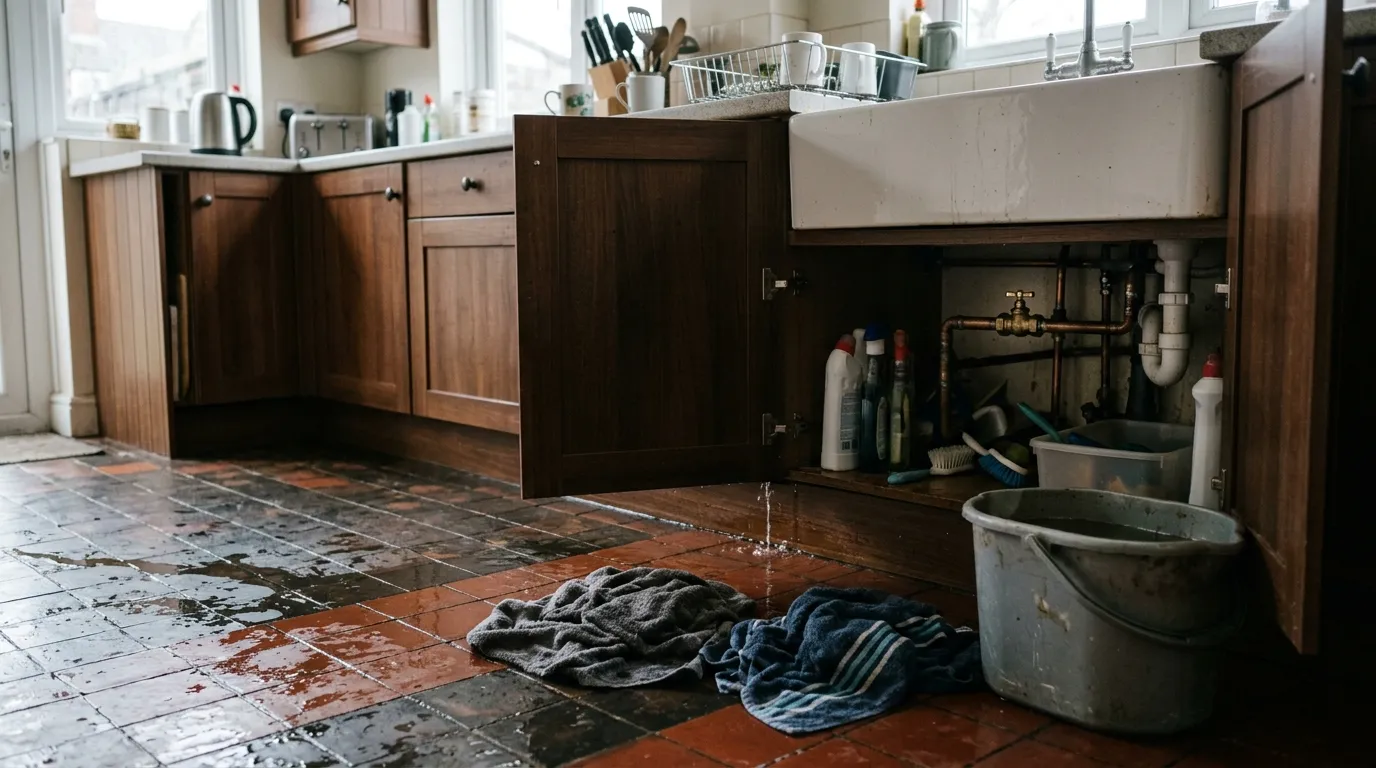
Water coming in, in order. Stopcock off. Then open every cold tap in the property, downstairs ones especially, which drains the pipework and the loft tank down and stops a stored system feeding the leak after the main is shut. Turn the heating off, because a sealed heating system holds its own water and the stopcock does nothing to it.
If water is anywhere near electrics, including a ceiling with wiring above it, kill the power at the main switch and stay out of that area. Then get buckets and towels down, and move what matters out of the way, because the thing that makes a claim expensive is rarely the pipe.
Then, and only then, make the call, and say four things: the postcode, that the water is off at the stopcock, where the water appeared, and whether the electricity is on. That is a minute of information that makes the difference between somebody arriving prepared and somebody arriving to ask questions.
If water is running now and the stopcock will not turn, send the postcode and say so in the first line. That changes what gets brought.
Frequently Asked Questions
- Do not force it. A snapped spindle on a seized stopcock turns a controllable leak into an uncontrollable one, which is a far worse position at two in the morning. Go outside to the pavement or boundary stop tap instead, which needs a long key but is usually free to turn, or isolate the leaking appliance at its own small valve. Then get the internal stopcock replaced as a planned job rather than an emergency one.
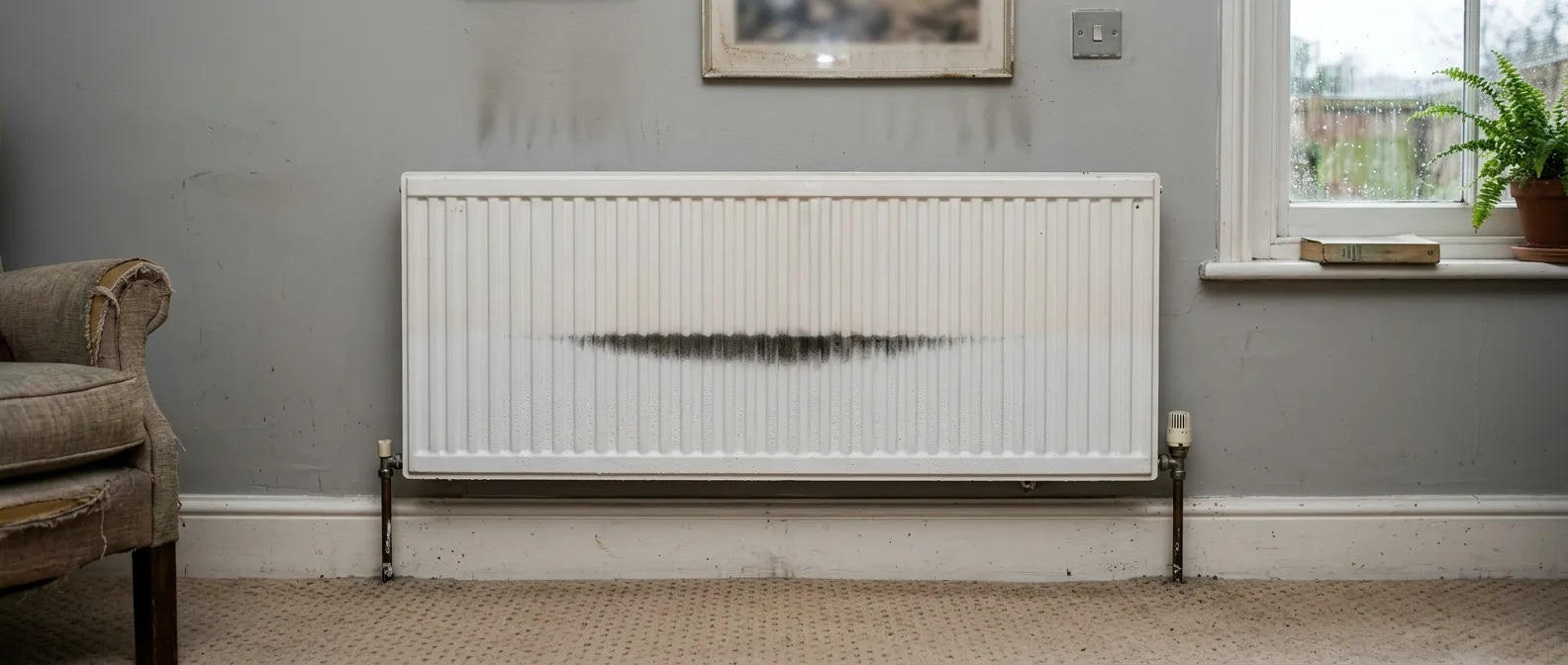
- It stops anything fed by the incoming main, which is most leaks. It does not immediately stop a leak from a stored system: a cold water tank in the loft or a vented cylinder will keep feeding a leak until it has emptied, which is why you also open the taps. And it does nothing at all for a heating leak, because a sealed heating system holds its own water. For that, the heating gets turned off and drained down.
- Water you cannot stop, water near electrics, a full loss of water to the property, a gas smell, and a drain backing up into the building. Those are the ones where waiting makes the damage worse or the situation unsafe. A dripping tap, a running toilet, one cold radiator and a slow waste are all miserable and none of them is an emergency, and they are cheaper to deal with in daylight.
- If water is anywhere near a consumer unit, a socket, a light fitting or a ceiling below one, yes, at the main switch, and then do not go back in there until it is dry and checked. If the water is nowhere near anything electrical, leave the power on, because you will want lighting to work with. Water coming through a ceiling counts as near electrics, even when nothing is visibly wet.